

A child’s first dentist visit can feel unfamiliar, especially when young children are unsure about the people, sounds, and equipment they will encounter. Parents can make the experience easier by introducing dental care early and creating positive expectations before the appointment. Preparing a child for their first dentist visit involves more than explaining what a pediatric dentist does, because timing, communication, and familiar routines can influence how comfortable children feel. Seven practical tips can help families reduce dental anxiety, prepare for the appointment, and encourage healthy attitudes toward dental care.
1. Schedule Your Child’s First Dentist Visit at the Right Age
Many parents assume children do not need a dental appointment until they have several teeth, but pediatric dental care should begin much earlier. The American Dental Association recommends scheduling the first dental visit after the first tooth appears and no later than the child’s first birthday. Early appointments allow dentists to examine developing teeth, identify potential problems, and explain how parents can prevent tooth decay. Children also have an opportunity to become familiar with a dental environment before they develop more complicated treatment needs.
- Schedule the first appointment within six months of the first tooth appearing, but no later than age one.
- Choose a pediatric dentist experienced in treating infants and young children.
- Ask whether the office offers introductory visits for new patients.
- Prepare questions about teething, brushing, fluoride, and feeding habits.
Early dental care matters because cavities can develop shortly after a child’s teeth emerge. The CDC’s 2024 Oral Health Surveillance Report found that approximately 11% of children ages two through five had at least one untreated cavity in their baby teeth. Beginning dental visits at the recommended age provides opportunities to discuss prevention and identify concerns while children are young. Parents should remember that establishing healthy dental habits is just as important as preparing for an individual appointment.
2. Introduce the Dentist Through Books and Pretend Play
Children often become nervous when they encounter unfamiliar experiences without understanding what will happen. Reading age-appropriate books about dental visits can help introduce the dentist in a friendly and understandable way. Parents can also create a pretend dental office at home using a toothbrush, stuffed animal, and small mirror. These simple activities give children opportunities to ask questions and become familiar with dental routines before entering the examination room.
- Read picture books featuring children who visit the dentist.
- Let children pretend to examine a stuffed animal’s teeth.
- Practice opening wide while counting teeth together.
- Allow children to ask questions about the dental appointment.
- Keep practice sessions brief and enjoyable.
A preschooler might enjoy pretending to be the dentist while a parent plays the patient. The parent can open wide, let the child count their teeth, and then reverse the roles. This familiar activity makes the idea of having teeth examined less mysterious. Younger infants may not understand pretend play, but parents can gently practice helping them open their mouths during everyday brushing routines.
3. Use Positive and Honest Language About the Dentist
Parents sometimes unintentionally introduce dental anxiety by describing appointments using frightening words or discussing their own unpleasant experiences. Children can interpret unfamiliar terms literally, particularly when adults mention pain, needles, or other procedures before explaining what actually happens. The American Dental Association encourages parents to maintain positive expectations and avoid using dental appointments as threats or punishment. Clear explanations help children understand what to expect without creating unnecessary concerns.
- Describe the dentist as someone who helps keep teeth healthy.
- Explain that the dentist may count and examine their teeth.
- Avoid sharing frightening personal dental experiences.
- Answer questions honestly using age-appropriate language.
Parents can explain that the dentist will look inside the child’s mouth and check how their teeth are growing. Simple descriptions are usually more helpful than detailed explanations about dental equipment. Promising that nothing will hurt should be avoided because parents cannot predict every sensation or procedure. A reassuring explanation can focus instead on the dentist’s role in helping children understand what is happening and keeping them comfortable.
4. Choose an Appointment Time When Your Child Is Well-Rested
Timing can influence how children respond to unfamiliar experiences, particularly during the toddler and preschool years. A tired or hungry child may have more difficulty following instructions, remaining patient, or adjusting to a new environment. The ADA recommends scheduling dental appointments when children are usually alert, rested, and cooperative. Parents should consider their child’s normal sleeping and eating patterns rather than automatically choosing the earliest available appointment.
- Avoid scheduling appointments during regular naptimes.
- Choose a morning appointment if the child is usually more cooperative early in the day.
- Offer a light meal before the visit unless the dental office gives different instructions.
- Brush the child’s teeth before leaving for the appointment.
- Allow enough travel time to avoid arriving in a rush.
A toddler who normally naps around noon may struggle with an appointment scheduled shortly before that rest period. Choosing an earlier time could allow the child to arrive more alert and comfortable. Parents should also confirm whether the dentist has provided any special instructions regarding eating or drinking. Routine examinations generally differ from appointments involving sedation or other procedures that require specific preparation.

5. Tell the Pediatric Dentist About Your Child’s Needs
Every child responds differently to unfamiliar people, sounds, and environments, making communication between parents and dental professionals particularly important. Pediatric dentists receive additional specialty training after dental school to care for infants, children, adolescents, and patients with special healthcare needs. The American Academy of Pediatric Dentistry explains that pediatric dental specialists complete two to three years of additional training focused on children’s oral health. Sharing relevant information before the visit can help the dental team plan an approach appropriate for the child’s developmental stage and individual needs.
- Explain whether the child has experienced anxiety during previous medical appointments.
- Discuss sensory sensitivities involving sounds, lighting, touch, or unfamiliar equipment.
- Share relevant medical conditions, medications, allergies, and communication needs.
- Ask whether additional appointment time or accommodations may be available.
Some children need extra time to become comfortable with unfamiliar adults, while others respond well when procedures are explained in short, simple steps. A child with sensory sensitivities might find the sound of dental equipment more unsettling than the examination itself. Parents who communicate these concerns ahead of time give the dental team an opportunity to consider appropriate adjustments. A pediatric dentist or another local community can explain what accommodations are available at that particular office.
6. Bring Comfort Items and Let the Dental Team Explain Each Step
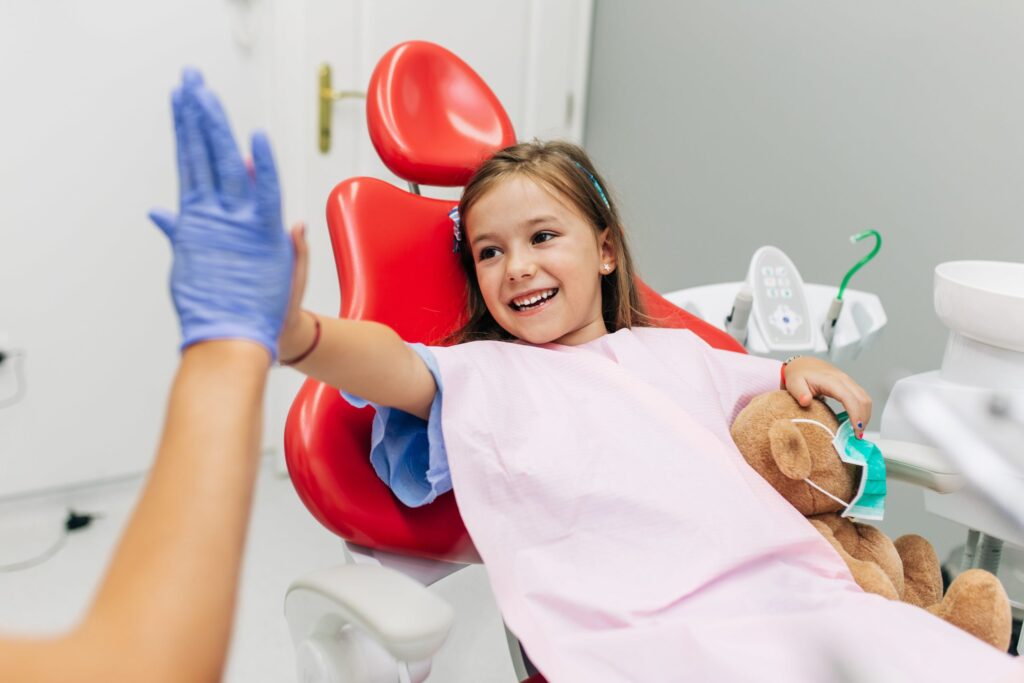
Familiar belongings can provide reassurance when children enter an unfamiliar dental office. A favorite stuffed animal, small blanket, or familiar book may help the child feel more secure while waiting for the examination. Pediatric dentists may also use a communication approach called tell-show-do, which introduces dental procedures through explanations and demonstrations before performing them. The American Academy of Pediatric Dentistry identifies tell-show-do as a behavior guidance technique that can help children become familiar with dental procedures.
- Bring a familiar stuffed animal, blanket, or comforting object.
- Ask whether parents can remain close during the examination.
- Encourage the child to listen while the dentist explains the equipment.
- Allow the dental team to introduce unfamiliar tools at a comfortable pace.
- Provide reassurance when the child becomes uncertain or overwhelmed.
A dentist might demonstrate how a small mirror works before using it to examine a child’s teeth. The child may be allowed to see the mirror, hear a simple explanation, and watch the dentist demonstrate its purpose. This approach can reduce uncertainty because the child receives information before experiencing an unfamiliar sensation. Parents should follow the dental team’s guidance while providing reassurance that matches their child’s needs.
7. Praise Your Child’s Effort Without Creating Pressure
Positive reinforcement can help children develop confidence during dental appointments, particularly when adults recognize small steps toward cooperation. A child who opens their mouth briefly, asks a question, or allows the dentist to count a few teeth has made meaningful progress. Parents should acknowledge these efforts without expecting every appointment to be completely free of tears. Crying or resisting an examination does not necessarily mean that the appointment was unsuccessful.
- Praise specific behaviors, such as listening or opening wide.
- Acknowledge the child’s effort even when the appointment feels difficult.
- Avoid threatening punishment for crying or feeling frightened.
- Do not promise expensive rewards or treats in exchange for cooperation.
- Discuss future appointments in a calm, encouraging way.
A parent might tell a child how well they listened while the dentist examined their teeth, even if the child needed reassurance throughout the appointment. This recognition places attention on the child’s effort rather than whether they remained completely calm. The dental team may recommend a shorter follow-up visit or additional preparation when a child experiences considerable anxiety. Building confidence can require several appointments, and progress often happens gradually.
What Happens During a Child’s First Dentist Visit?
A child’s first dental appointment generally focuses on examining the mouth, discussing oral health, and helping the family become familiar with the dental office. The dentist may check the teeth, gums, jaw, and bite while evaluating the child’s risk of developing cavities. Depending on the child’s age and individual needs, the visit may also include cleaning, preventive care, and guidance about fluoride. Parents who want additional information can review what to expect during a first visit with a pediatric dentist before the appointment.
Helping Children Develop Positive Dental Habits
A positive relationship with dental care begins with patient preparation, supportive communication, and age-appropriate expectations. Parents can help their children become more comfortable by introducing dental routines early and recognizing that confidence develops at different speeds. Dr. Jason Parker Pediatric Dentistry provides children’s dental care in Slidell and Metairie, including early dental examinations and preventive services. Consistent oral hygiene at home and regular professional evaluations can help children develop healthier habits as they grow.
Key Takeaways for Your Child’s First Dentist Visit
Preparing for a child’s first dentist visit involves introducing dental care early, creating realistic expectations, and helping children feel supported throughout the experience. Familiar activities, thoughtful scheduling, and open communication with a pediatric dentist can make the appointment easier to manage. Parents should focus on building positive experiences rather than expecting perfect cooperation during every visit.
- Schedule the first dental visit after the first tooth appears and no later than the first birthday.
- Introduce dental appointments through books, games, and familiar routines.
- Choose appointment times that work with the child’s normal schedule.
- Share medical, emotional, and sensory concerns with the dental team.
- Praise small accomplishments and maintain realistic expectations.
Frequently Asked Questions About a Child’s First Dentist Visit
When should a child have their first dentist appointment?
The American Dental Association recommends a dental visit within six months of the first tooth appearing and no later than the first birthday. Early dental appointments help establish preventive care and allow parents to ask questions about their child’s oral development.
How can parents prepare a toddler for their first dental visit?
Parents can read books about dental care, practice opening wide at home, and describe the appointment using simple language. Scheduling the visit when the child is well-rested and bringing a familiar comfort item may also help.
Can parents stay with their child during the first dental appointment?
Many pediatric dental practices allow parents to remain nearby during early examinations, although individual policies and clinical circumstances vary. Parents should ask about the office’s approach when scheduling the appointment.
What should parents bring to their child’s first dentist visit?
Parents should bring relevant medical and dental history, insurance information when applicable, completed patient forms, and a list of questions. A familiar toy or small blanket may provide additional reassurance for children who feel nervous.
What if a child refuses to open their mouth at the dentist?
Young children sometimes refuse examinations because they feel uncertain or overwhelmed. Pediatric dentists may use age-appropriate explanations, gentle demonstrations, and additional time to help children become more comfortable. The dentist can determine whether to continue, adjust the examination, or recommend another appointment.
What If Your Child Cries During the First Dental Appointment?
Some children cry during their first dental appointment despite careful preparation, and this reaction is not unusual. Infants and toddlers may become upset when unfamiliar people examine their mouths or when they are asked to remain still. Parents can help by staying calm, offering reassurance, and allowing the dental team to respond appropriately. The goal is to provide necessary dental care while building a foundation for more comfortable visits in the future.
- About the Author
- Latest Posts

Dr. Jason Parker, a distinguished dentist based in New Orleans, was honored with the New Dentist Award by the Louisiana Dental Association in 2008 for his contributions to both the dental profession and the community. With a background in biology and business administration, Dr. Parker has been in private practice since 2001 and specializes in pediatric dentistry